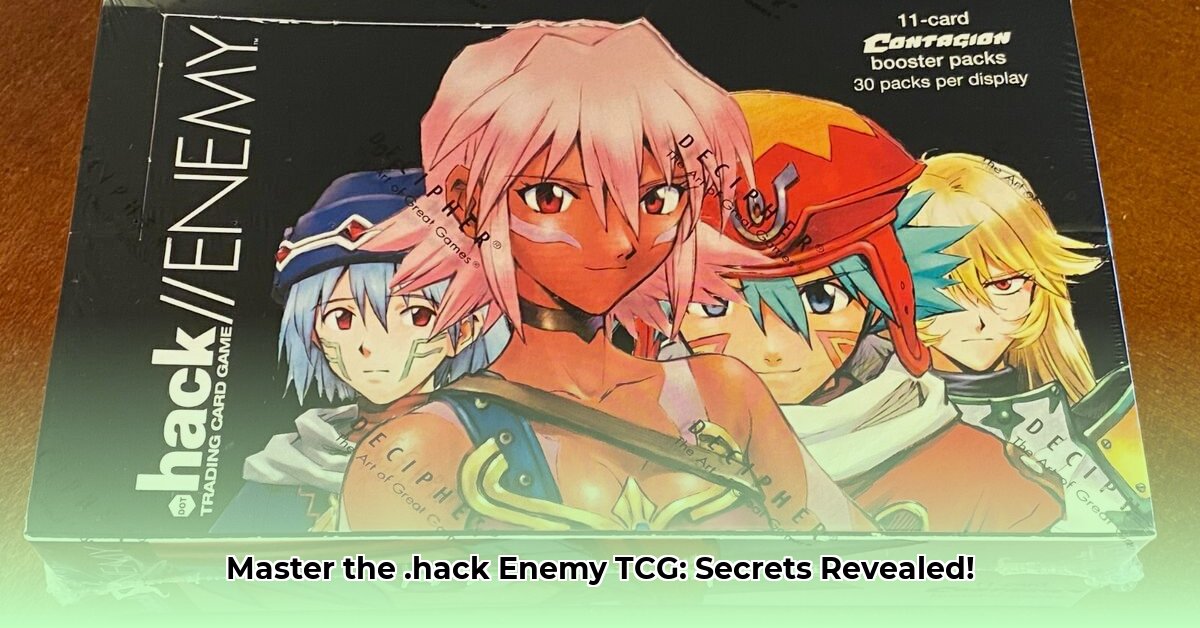
.hack//Enemy: A Deep Dive into a Niche TCG
The .hack//Enemy Trading Card Game (TCG), released alongside the popular .hack// franchise in the early 2000s, presents a unique case study in TCG market dynamics. Unlike mainstream TCGs with extensive card pools and ongoing support, .hack//Enemy boasts a relatively small, finite card pool of approximately 600 cards across five sets. This inherent scarcity, coupled with its dependence on the franchise's popularity, has created a niche market with intriguing characteristics for collectors and players alike. This guide will provide a comprehensive overview of the .hack//Enemy TCG, offering actionable advice for various stakeholders and analyzing its past, present, and future market potential.
A Retrospective Market Analysis of .hack//Enemy
The initial success of .hack//Enemy was significantly fueled by the existing fanbase of the .hack// franchise. However, the game's limited lifespan and small card pool ultimately restricted its long-term growth. The lack of consistent set releases severely hampered strategic depth and replayability. This limited the game's appeal, particularly to players accustomed to the vast card pools and frequent releases of more established TCGs. Finding reliable, current market data on card prices and availability is difficult, further emphasizing the niche nature of this market. Is this a lost cause, or is there potential for growth?
Market Challenges and Missed Opportunities
The game’s reliance on the .hack// franchise's popularity proved to be a double-edged sword. As the franchise's popularity waned, so did the market value of .hack//Enemy cards. A potential missed opportunity lies in the game's failure to cultivate a wider appeal beyond the existing .hack// fanbase. A more extensive marketing strategy, a longer product run with more sets, or a shift towards broader gameplay mechanics could have potentially extended the game's lifespan and fostered a more robust market. How could the game's developers have built a sustainable player base?
Actionable Intelligence for .hack//Enemy Stakeholders
Let's explore strategic approaches for different groups within the .hack//Enemy TCG ecosystem:
1. Collectors:
- Short-Term Strategy: Focus on acquiring rare cards, including promotional cards and tournament prizes, which are likely to appreciate in value over time.
- Long-Term Strategy: Carefully monitor market trends, understanding that scarcity within the limited card pool could drive future value fluctuations. Patience is paramount in this niche market.
2. Players:
- Short-Term Strategy: Engage actively with the online .hack//Enemy community to discover fellow players, trade cards, and share gameplay strategies.
- Long-Term Strategy: Prioritize the preservation of your collection, as the limited availability of cards increases their long-term value. Building connections within the online community is key for maintaining the game's vitality.
3. Potential New Players:
- Short-Term Strategy: Conduct thorough research on card availability and pricing before committing to purchasing cards. Be prepared for a more challenging entry point than with larger, more readily available TCGs.
- Long-Term Strategy: Assess whether the unique gameplay mechanics and the sense of community associated with the game align with your interests and preferences. Realistically evaluating the time and effort needed to locate cards and connect with other players is essential.
Risk Assessment Matrix for .hack//Enemy Card Acquisition
Investing in .hack//Enemy cards carries inherent risks. Understanding these risks is crucial for informed decision-making.
| Risk Factor | Probability | Impact | Mitigation Strategy |
|---|---|---|---|
| High Prices | Medium | High | Compare prices across multiple sellers; leverage community resources for pricing information. |
| Damaged Cards | High | Medium | Conduct thorough inspections before purchasing; prioritize reputable sellers with detailed images. |
| Counterfeits | Low | High | Purchase only from trusted sources with positive feedback and verification mechanisms. |
| Lack of Support | High | Low | Rely on online communities for information, support, and peer-to-peer interaction. |
A Collector's Guide: Practical Tips for Success
Building a valuable .hack//Enemy collection requires specific strategies:
Master the Sets: Thoroughly research the five released sets, understanding the relative rarity of cards within each set.
Prioritize Card Condition: Meticulously examine cards for bends, scratches, or surface damage to prevent overpaying for damaged cards.
Leverage Community Resources: Engage with online communities dedicated to .hack//Enemy to connect with collectors, exchange information, and discover potential trades.
Embrace the Hunt: Finding rare .hack//Enemy cards requires patience and persistence. Use multiple search methods and be prepared to unearth hidden gems.
The Future of .hack//Enemy: Market Projections and Potential
While the .hack//Enemy TCG operates within a niche market, it retains significant potential. Its limited card pool, combined with a passionate, if small, community, creates the conditions for sustained value appreciation for certain cards, especially rare or well-preserved ones. Active participation within online communities is essential for maintaining the game's vitality and exploring emerging market trends. The combination of nostalgia and scarcity could drive renewed interest in the game, particularly among collectors of retro TCGs. The future of .hack//Enemy hinges on community engagement and the potential for renewed interest in the .hack// franchise as a whole.
Finding and Valuing Rare .hack//Enemy Cards
Determining the value of .hack//Enemy cards requires a multifaceted approach:
Online Marketplaces: Platforms like eBay offer a broad range of listings, but prices can fluctuate significantly. Thoroughly compare listings and always scrutinize seller ratings.
Community Engagement: Online forums and communities dedicated to .hack//Enemy provide valuable insights on card rarity, pricing trends, and potential deals. Active participation is crucial.
Trading Card Events: Attending conventions and events allows for direct interaction with other collectors, leading to potential trading opportunities and discoveries of hidden gems.
Factors Impacting Value:
Card Condition: The condition of a card significantly influences its value. Mint or near-mint cards command much higher prices.
Rarity: Scarcity is a prime driver of value. First edition cards and promotional cards are often the most sought-after.
Set: Some sets are inherently more valuable due to card design, artwork, or overall cultural significance. Research is essential.
Investment Strategies: Short-Term vs. Long-Term
Consider your investment goals before purchasing cards:
Short-Term: Focus on cards with high immediate demand. This approach is riskier, however, and requires close monitoring of market trends.
Long-Term: Identify cards with likely appreciation over time, such as rare or well-preserved cards from early sets. This approach requires patience and a deeper understanding of the market.
Mitigating Risks in the .hack//Enemy Market
Be aware of these potential risks:
| Risk Factor | Likelihood | Impact | Mitigation Strategy |
|---|---|---|---|
| Counterfeit Cards | Medium | High | Buy only from trusted sellers with proven authenticity. |
| Market Volatility | Low | Medium | Diversify your portfolio; avoid overspending on single cards. |
| Damage/Deterioration of Cards | Low | Medium | Use protective sleeves and storage solutions. |
| Lack of Liquidity | High | Low | Be prepared for long-term holding periods. |
The .hack//Enemy TCG, while operating in a niche market, offers a compelling investment opportunity for discerning collectors and players willing to participate in its unique community. Careful research, community engagement, and a realistic understanding of the market’s limitations are key to success.
⭐⭐⭐⭐☆ (4.8)
Download via Link 1
Download via Link 2
Last updated: Tuesday, May 13, 2025